YOUR BAG

🚨🌎 Your cart is empty.
Tatler Asia explores the rise of "bro-chitecture," a new wave of luxury homes designed for men of status and taste. Anchored by the vision of Jesse Armstrong and his studio Mountainhead, these residences blend power, retreat, and mastery of space, embodying a distinctly masculine approach to comfort and aesthetics. The article delves into how this trend redefines domestic opulence—where layered textures, purposeful minimalism, and elevated amenities come together in spaces that reflect both identity and ambition.

There are few things in design as enduring — or as divisive — as the intersection of masculinity and luxury. In the latest showcase from Tatler Asia, the phenomenon has a new name: “Bro-chitecture.” It’s less a fad than an evolving attitude, one that boldly reconfigures high-end residential architecture for a distinctly male sensibility. Its newest example, screenwriter Jesse Armstrong’s “Mountainhead” residence, isn’t just another showpiece tucked away in an enviable landscape. It’s a blueprint for the man cave reimagined, curated for an audience who expects their personal spaces to be as innovative as their investments, as expressive as their wardrobes.
Jesse Armstrong — celebrated for his acerbic wit as the creator of HBO’s “Succession” — partners with Canadian architecture studio MacKay-Lyons Sweetapple for “Mountainhead,” and together they have sculpted something akin to a fortress on the hill. The home’s silhouette is a study in angular austerity, with visceral references to medieval strongholds and clandestine retreats, yet the interiors are far from foreboding. Here, “male-coded” design pivots away from caricatured aggression and celebrates restraint, confidence, and introspection. Vast stone walls and exposed steel beams cradle soaring glass panes, flooding the interior with natural light and framing cinematic views of Nova Scotia’s rugged coastline.
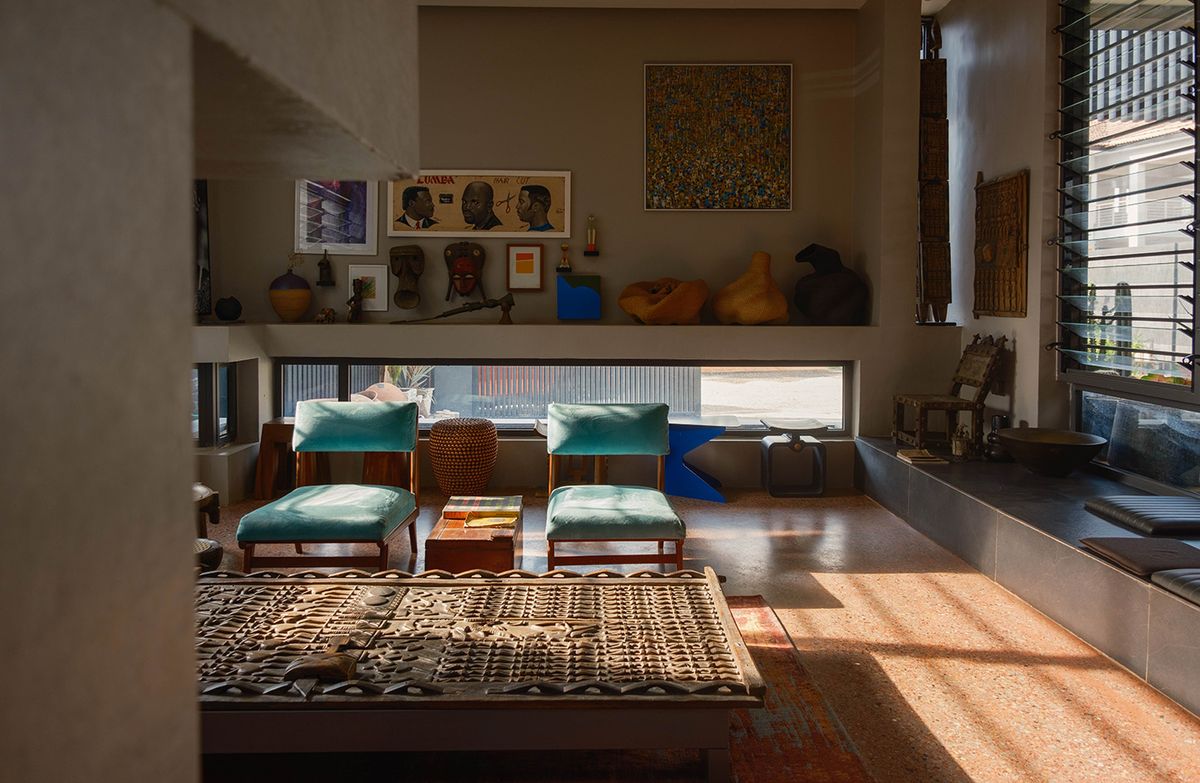
But what distinguishes “Mountainhead” is its instinctive celebration of privacy and self-reliance. Spaces unfold in sequence rather than sprawl. Texture takes precedence over ornament: rough-hewn timbers, blackened metals, and deep, inviting leathers evoke the tailored ruggedness of a Savile Row jacket crossed with the unflinching honesty of industrial chic. Every detail is designed to satiate a certain nostalgia for the impossible man cave — not the one of youth, littered with memorabilia and consoles, but one re-forged on adult terms, as sophisticated as it is inviting.
A prevailing theme throughout “Mountainhead” is sovereignty. The primary suite is arranged like an observatory, with panoramic vistas that reward a contemplative morning ritual. Entertainment spaces flow seamlessly into private nooks, suggesting a home that is as much a stage for camaraderie as it is a sanctuary for solitude. There is a directness in the approach — not just in program and plan, but in the very feel of the house. This is not a place that feigns humility. It is, instead, a confident assertion of one’s territory in an increasingly interconnected world.
Central to the “Bro-chitecture” movement is the desire for control. Innovations like integrated home automation, climate technologies, and discreet surveillance marry comfort with command. Armstrong, an architect of narrative tension, prioritizes systems that enable both performance and retreat, striking a careful balance between visibility and discretion. It's a coded luxury — not unapproachable, but quietly exclusive, even conspiratorial in its admission. If traditional high-end dwellings exult in extravagance, “Mountainhead” is focused, disciplined, handsome in its singular vision.
The significance of “Bro-chitecture” is twofold. On one hand, it addresses a largely unspoken demand: tailored environments for men who seek luxury without frivolity, exclusivity without excess. On the other, it signals a tectonic shift toward more literal, tactile design — a reaction against the dematerialized world of tech-driven minimalism. The spaces crafted by Armstrong and MacKay-Lyons Sweetapple are rich in material contrast, a veritable symphony of cool steel, supple leather, and warm wood. This is a home that feels grounded, both literally and metaphorically, rooted in a love for craft and authenticity.
To be clear, “Mountainhead” is not a sociological treatise, nor does it pander to gendered clichés. It is, instead, aspirational architecture for a new kind of luxury consumer: one who understands that elegance can be quietly forceful, that comfort is best served with a streak of wilderness. The home’s genius lies in how it distills these values without pomp. There is no performative grandeur here, only rigor and subtlety.
What Armstrong and his collaborators have achieved with “Mountainhead” marks a significant departure from the overwrought maximalism of yesteryear’s luxury homes. In embracing the principles of “Bro-chitecture,” they have sculpted a residence with rare depth—a home designed not to impress, but to belong. For the global connoisseur of design, this signals a new alignment: personal spaces that reflect both confidence and discernment, homes built not as monuments, but as fortresses of intellect and soul.
In the era of “Bro-chitecture,” restraint is the new badge of distinction. And if “Mountainhead” is any indication, the future of luxury lies not just in what is built, but in the values it quietly defends.