YOUR BAG

🚨🌎 Your cart is empty.
Alice Asafu-Adjaye’s Compact House in Accra redefines urban living through a seamless blend of functionality and aesthetic harmony. Designed for a creative couple, the home maximizes limited space with clever built-ins, fluid movement between indoors and out, and a thoughtful palette of local materials. The project offers a visionary model for contemporary residences in West Africa, balancing refined restraint with soulful practicality.
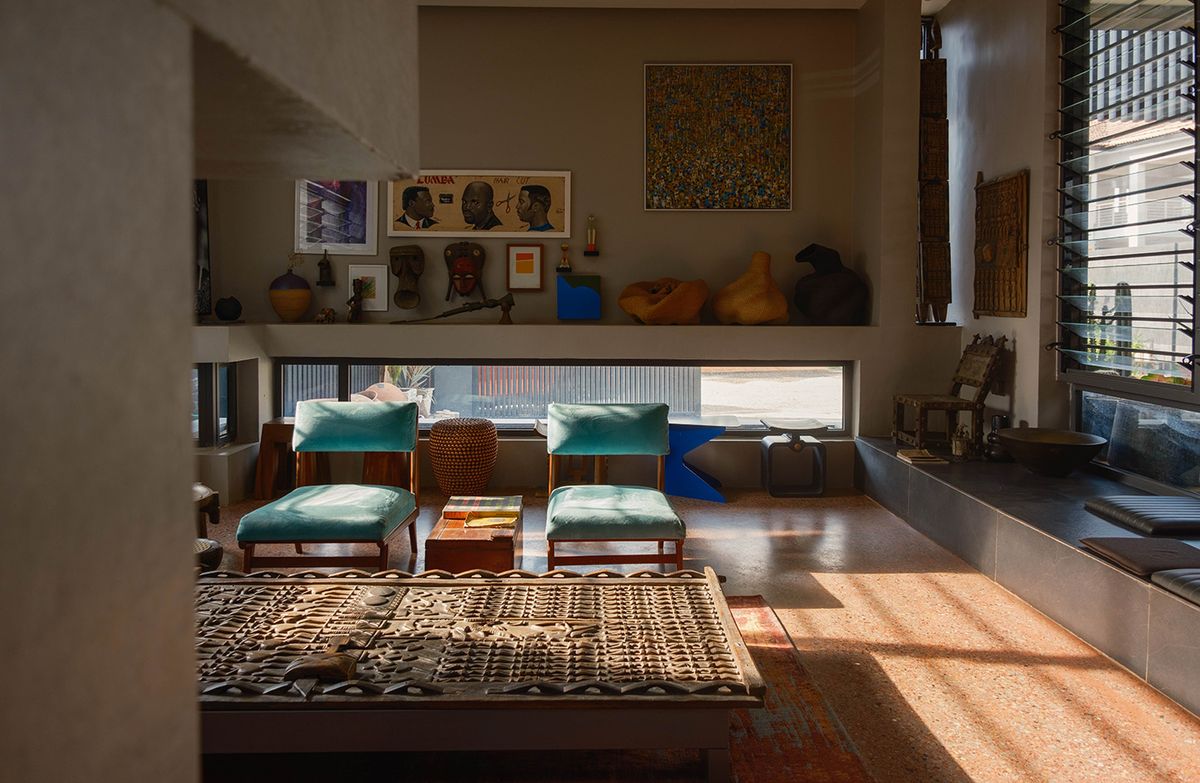
In the ever-evolving architectural landscape of Ghana’s capital, Accra, a project of remarkable clarity and restraint has recently caught international attention. The Compact House, conceived by Alice Asafu-Adjaye, embodies a powerful statement about the future of urban living—not just in West Africa, but for cities around the globe searching for nuanced responses to density, climate, and cultural context. Presented in a recent feature on Wallpaper, this residence reimagines the single-family home, distilling it to its essentials while crafting an architecture that is both pragmatic and poetic.
Accra is experiencing a rapid transformation, with increasing pressure on land and resources as the city continues to grow. This context animates the Compact House’s design. Set on a modest 220 sq metre plot, the house deftly negotiates limited space, eschewing excess for a design that is spatially inventive and distinctly contemporary. The architectural response here does not channel nostalgia but draws on local realities—climatic, social, and material—while pointing to a new kind of city dwelling that feels both global and deeply personal.
The form is striking in its controlled discipline. Rather than sprawling outward, the design prioritises verticality and compactness, presenting a crisp, sculptural volume that quietly asserts itself. Yet, from the moment one approaches the property, there is no sense of confinement. The strategic arrangement of fenestration paired with light-filtering screens bathes the interiors in a gentle diffuse glow, blurring boundaries between inside and out, while also ensuring privacy in a densely populated neighbourhood.
Throughout, one senses an attentive engagement with light, air, and material. Asafu-Adjaye has crafted a home that invites movement and reveals itself gradually: courtyards punctuate the plan, acting as pockets of respite and drawing breezes through to temper Accra’s storied heat. The house’s porosity eschews the fortress-like quality of conventional security walls—holy in much of Accra—in favour of a subtler, more open dialogue with its context.
Materials play their own narrative role. Exposed concrete and locally sourced timber anchor the structure with a striking physicality, while simultaneously referencing the modernist heritage of Ghanaian architecture and contemporary approaches to sustainability. The interiors are kept deliberately unfussy, allowing for intricate patterns of shadow and sun to animate the main living spaces throughout the day. This pared-back sensibility avoids the pitfall of austerity by reveling in fine details, from the tactile surfaces of the walls to the way built-in furniture blends with its surroundings. Here, luxury is not about excess, but refinement.
Perhaps most compelling is how the Compact House manages to capture the complexity of modern Ghanaian life without reverting to pastiche. Instead of replicating the aesthetic markers of West African vernacular, Asafu-Adjaye offers a vision rooted in lived realities: multifunctional rooms that adapt with family needs, informal connections between inside and outside, and a plan that accommodates both togetherness and solitude. This is a house that grows with its inhabitants, inviting interpretation rather than prescribing a fixed lifestyle.
The significance of such work in Accra’s context cannot be overstated. As the city’s skyline becomes increasingly crowded with generic residential towers and Western-style villas, the Compact House provides a counterpoint—a new model of sophistication grounded in place and purpose. It asks us to reconsider what urban African domesticity might look like in the twenty-first century, embracing complexity and specificity over formulaic solutions.
For the discerning observer, the Compact House is more than an architectural exercise. It is a meditation on how we might live in cities marked by scarcity and abundance, tradition and innovation. In distilling the home to its most vital qualities, Alice Asafu-Adjaye prompts a thoughtful conversation about adaptation and authenticity—a conversation that resonates far beyond Accra.
This project will no doubt become reference point for architects, designers, and culturally engaged residents throughout West Africa and further afield. It celebrates the essential, sheds what is unnecessary, and frames a new poetic for urban living in Ghana—one attuned to climate, place, and the evolving ambitions of its people. The Compact House, in its measured brilliance, stands as a testament to the exciting possibilities that arise when international design sensibilities are matched with an intimate understanding of local environment and culture.